

Quick answer
For healthy adults, caffeine pouches are about as safe as the same amount of caffeine from coffee, as long as your total daily caffeine stays at or under 400 mg, the level the FDA says is not generally associated with negative effects. The real risks are taking too much caffeine at once, stacking pouches with coffee or energy drinks, gum irritation from long use in one spot, and use by kids, teens or anyone pregnant.
Key takeaways
- Caffeine is caffeine: the dose matters more than the format.
- FDA reference: up to 400 mg a day for most healthy adults. EFSA: single doses up to 200 mg are of no concern for healthy adults.
- Common side effects of too much: jitters, fast heartbeat, upset stomach, headache and poor sleep.
- Not for: children, teens, pregnancy or nursing, caffeine-sensitive people, and some heart or anxiety conditions.
- Long-term studies on caffeine pouches specifically are limited, so be conservative.
What makes a caffeine pouch safe or unsafe?
A caffeine pouch is a delivery method. The caffeine inside behaves like caffeine from any other source once it reaches your blood. So the safety question breaks down into three parts:
- How much caffeine you take per pouch and per day.
- Who is using it.
- How you use it: placement, time in the mouth and how often.
How much caffeine is safe?
Two major food safety agencies have looked at this question:
- The U.S. FDA cites 400 mg per day as an amount not generally associated with dangerous, negative effects for healthy adults. It notes that people differ widely in how fast they process caffeine (FDA).
- The European Food Safety Authority concluded that single doses up to 200 mg and daily intakes up to 400 mg do not raise safety concerns for healthy adults, and that up to 200 mg a day is fine during pregnancy (EFSA).
Based on the FDA 400 mg daily reference. Coffee, tea, soda and energy drinks all count toward the same total.
Count everything
One 200 mg pouch plus two 8 oz cups of brewed coffee (about 96 mg each, per Mayo Clinic) is roughly 392 mg. Add a soda and you are over 400 mg.
Caffeine pouch side effects
Side effects come from too much caffeine, not from the pouch itself. Mayo Clinic lists these signs that you may be taking too much (Mayo Clinic):
| Side effect | What to do |
|---|---|
| Jitters, shakiness or restlessness | Remove the pouch early and use a lower strength next time |
| Fast or pounding heartbeat | Stop caffeine for the day; seek care if it does not settle |
| Upset stomach or nausea | Try a pouch after eating instead of on an empty stomach |
| Headache | Can come from too much caffeine or from withdrawal; keep intake steady |
| Trouble sleeping | Stop pouches at least 6 hours before bed |
| Gum tingling or irritation | Rotate sides and shorten time per pouch |
The FDA warns that toxic effects like seizures can be seen with rapid consumption of around 1,200 mg of caffeine (FDA). That is far more than any normal pouch routine, but it shows why you should never use several pouches at once.
Are caffeine pouches bad for your gums?
There are no long-term studies on caffeine pouches and gum health yet. The closest evidence comes from nicotine pouches, which use the same placement. A 2025 case report described localized gum recession at the exact spots two young men placed nicotine pouches daily, though the author noted cause and effect could not be proven (Alkhatib, 2025). A 2025 pilot study of dentists who switched to a newer pouch found mouth lesions improved over five weeks, while self-reported gum recession did not change (La Rosa et al., 2025).
The practical takeaway: rotate sides, do not sleep with a pouch in, keep sessions within the label time and see a dentist if you notice a sore, white patch or receding gum. More in Are caffeine pouches bad for your gums?.
Who should not use caffeine pouches?
- Children and teens. Pediatric experts advise children under 12 to avoid caffeine and teens to keep it to about 100 mg a day, so a single high-strength pouch is too much (Nationwide Children’s). Lip Laundry sells only to adults 21+.
- Pregnant or nursing people. ACOG advises limiting caffeine to under 200 mg a day during pregnancy (ACOG). Talk to your doctor first.
- People sensitive to caffeine or with anxiety, heart rhythm problems, high blood pressure or seizure disorders.
- Anyone on interacting medications. Ask your pharmacist about caffeine with any prescription or supplement.
Caffeine pouches vs. coffee and energy drinks: which is safer?
| Caffeine pouch | Brewed coffee (8 oz) | Energy drink (8 oz) | |
|---|---|---|---|
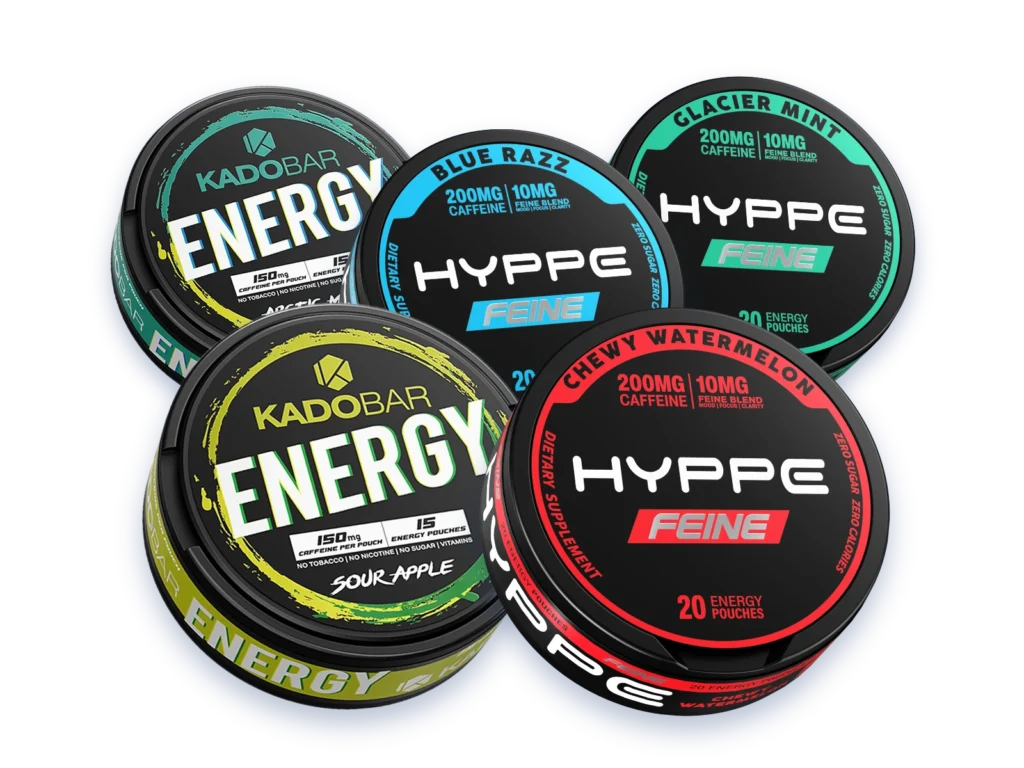
| Caffeine | 150–200 mg (HYPPE / Kado Bar) | About 96 mg | About 79 mg |
| Sugar | 0 g (HYPPE / Kado Bar) | 0 g black | Often high in regular versions |
| Dose clarity | Fixed per pouch | Varies by brew | Labeled per can |
| Main safety risk | Strong dose in one pouch | Easy to overdrink | Sugar plus stacked stimulants |
No format is automatically safer. A pouch packs more caffeine per serving than a cup of coffee, so it rewards people who read the label and count. See caffeine pouches vs. coffee vs. energy drinks for the full comparison.
7 rules for using caffeine pouches safely
- Read the caffeine number on the can before your first pouch.
- Start with a lower strength if you are new or sensitive.
- Use one pouch at a time, never two at once.
- Keep your daily total at or under 400 mg from all sources.
- Stop at least 6 hours before bed.
- Rotate sides and stick to the label time.
- Store cans away from kids and pets, and throw used pouches in the trash.
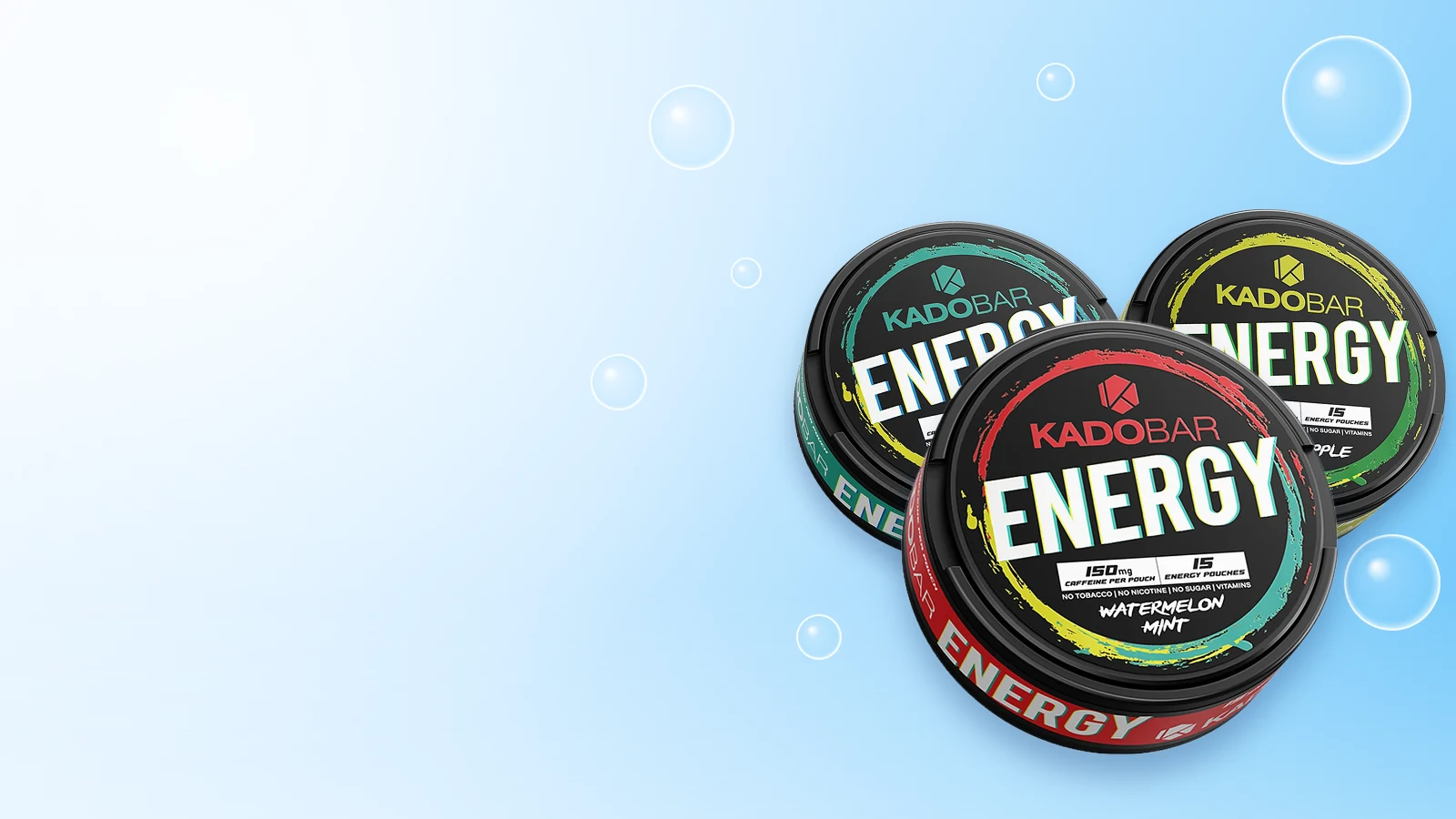
Prefer a moderate dose? Kado Bar Energy has 150 mg per pouch.
Frequently asked questions
Can caffeine pouches cause a heart attack?
For healthy adults within normal caffeine limits, there is no evidence that caffeine pouches cause heart attacks. Very high caffeine doses can raise heart rate and blood pressure, so people with heart conditions should talk to a doctor first.
Are caffeine pouches addictive?
Caffeine can cause mild dependence, and stopping suddenly may bring headaches or tiredness for a few days. That is very different from nicotine addiction, and true caffeine pouches contain no nicotine.
Are caffeine pouches safer than nicotine pouches?
They avoid nicotine, which is highly addictive. But a caffeine pouch still delivers a strong stimulant dose, so it should be used within caffeine limits.
Can you overdose on caffeine pouches?
Yes, if you take far too much caffeine. The FDA notes toxic effects can appear around 1,200 mg taken quickly. Never use multiple pouches at once or combine them with other high-caffeine products.
Are caffeine pouches FDA approved?
Caffeine pouches are generally sold as foods or dietary supplements, which the FDA does not pre-approve. Brands are responsible for safety and labeling.
Sources
- U.S. Food and Drug Administration, “Spilling the Beans: How Much Caffeine Is Too Much?” (2024). www.fda.gov
- European Food Safety Authority, “Scientific Opinion on the safety of caffeine” (2015). www.efsa.europa.eu
- Mayo Clinic, “Caffeine: How much is too much?”. www.mayoclinic.org
- Mayo Clinic, “Caffeine content for coffee, tea, soda and more”. www.mayoclinic.org
- Nationwide Children’s Hospital, “Caffeine Pouches: What Parents and Caregivers Need to Know” (2026). www.nationwidechildrens.org
- ACOG Committee Opinion No. 462, “Moderate caffeine consumption during pregnancy” (2010). pubmed.ncbi.nlm.nih.gov
- Alkhatib O.A., “Localized gingival recession and leukoplakia associated with nicotine pouch use: two clinical case reports,” BMC Oral Health (2025). link.springer.com
- La Rosa G.R.M. et al., “Self-reported oral health outcomes after switching to a novel nicotine pouch technology,” Acta Odontologica Scandinavica (2025). medicaljournalssweden.se
- Everyday Health, “Are Caffeine Pouches a Safe Way to Get an Energy Boost?”. www.everydayhealth.com