
Quick answer
For most healthy adults, caffeine peaks in the blood about 30 to 60 minutes after you take it and has a half-life of roughly 4 to 6 hours, meaning half is still in your system after that time. It can take about 24 hours to clear completely. Half-life ranges widely, from under 3 to over 10 hours, depending on genetics, pregnancy, smoking, liver health and some medications.
~45 min
Typical time to peak
4–6 hrs
Typical half-life
~24 hrs
To clear almost all
6 hrs
Stop before bed
Caffeine half-life, explained
“Half-life” is the time it takes your body to clear half of the caffeine you took. If you take 200 mg at noon and your half-life is 5 hours, about 100 mg is left at 5 PM and about 50 mg at 10 PM. That is why an afternoon caffeine pouch can still affect sleep.
The International Society of Sports Nutrition notes that caffeine is rapidly absorbed, with blood levels peaking within about an hour, and that its half-life typically falls in the range of a few hours but varies widely between people (ISSN, 2021). The FDA also notes people differ in how fast they eliminate caffeine (FDA).
Timeline: how much caffeine is left?
Simplified model for illustration; real levels depend on absorption and your personal half-life.
Simplified model for illustration.
The bedtime math
A 200 mg pouch at 3 PM can leave about 66 mg in your system at 11 PM, roughly the caffeine in a shot of espresso. That is enough to make sleep lighter for many people.
What changes how long caffeine lasts?
| Factor | Effect on caffeine half-life |
|---|---|
| Genetics (CYP1A2 enzyme) | Fast metabolizers clear caffeine sooner; slow metabolizers feel it longer |
| Pregnancy | Half-life gets much longer, especially late in pregnancy |
| Oral contraceptives | Can lengthen half-life |
| Smoking | Speeds up caffeine clearance |
| Liver function | Liver disease slows clearance |
| Some medications | Certain drugs slow caffeine breakdown; ask your pharmacist |
How long does a caffeine pouch last vs. coffee?
Once caffeine is in your blood, it behaves the same whatever the source. The difference is the dose and how fast it arrives. Caffeine absorbed through the lining of the mouth, as studied with caffeine gum, can arrive faster than a swallowed capsule (Kamimori et al., 2002). A pouch also releases caffeine over the 20 to 60 minutes it sits in your lip. Because pouches often carry more caffeine than a cup of coffee, the effect can last longer too.
| Source | Caffeine | Left after 5 hrs (5-hr half-life) |
|---|---|---|
| Brewed coffee, 8 oz | 96 mg | ~48 mg |
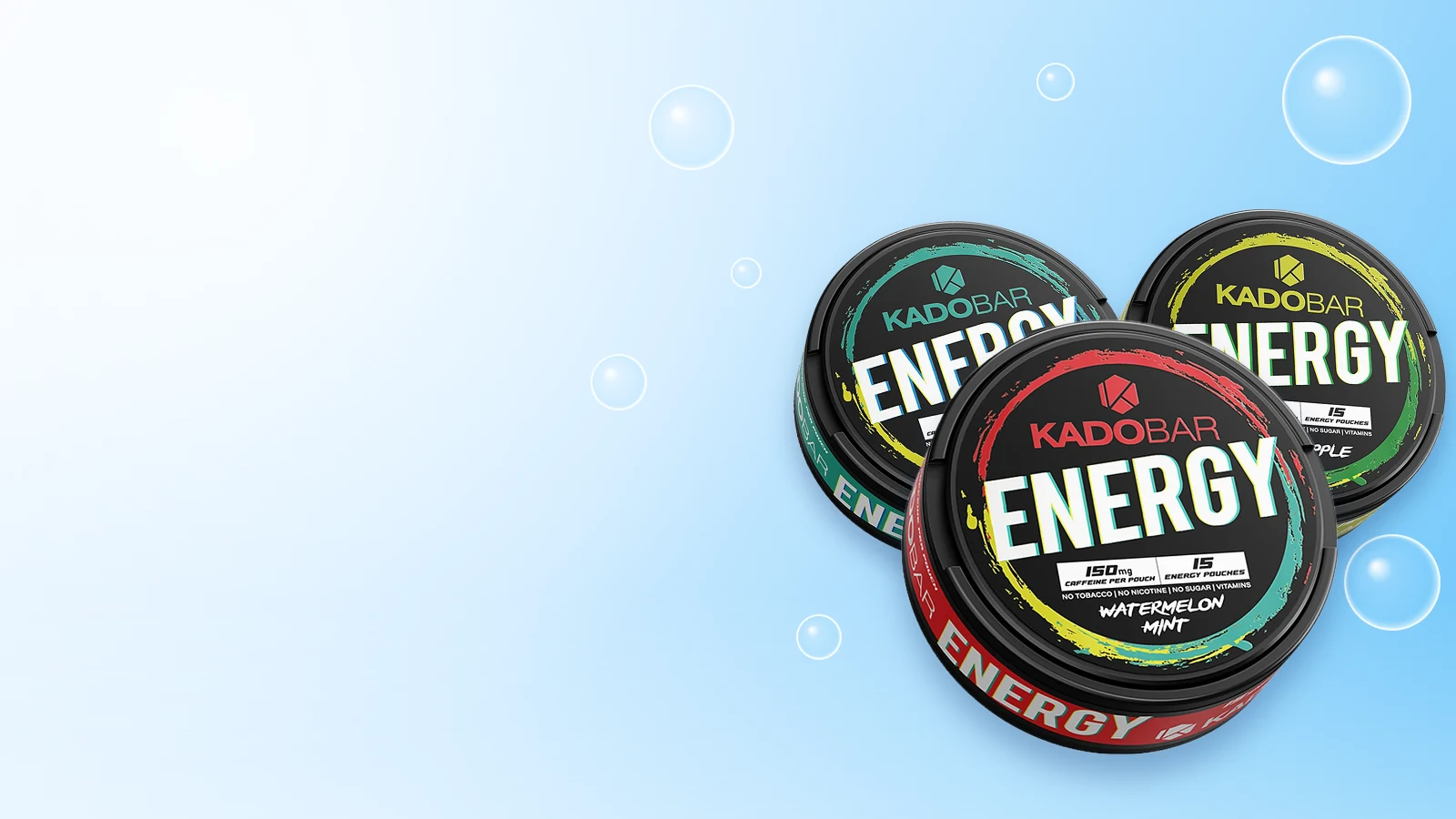
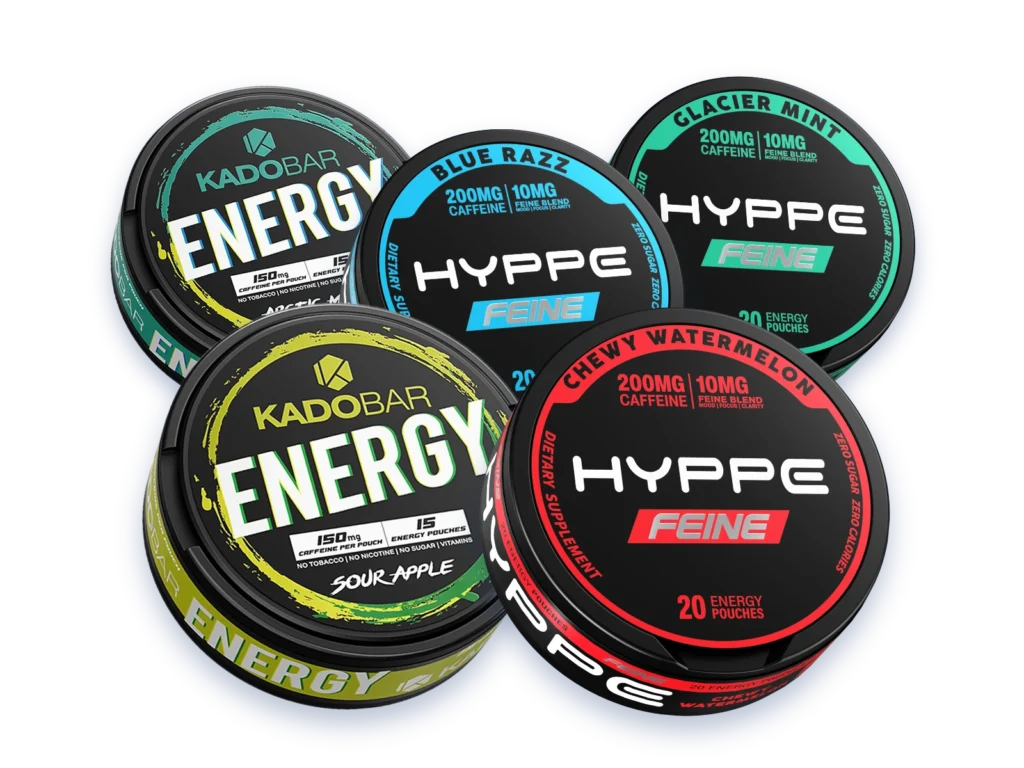
| Kado Bar Energy pouch | 150 mg | ~75 mg |
| HYPPE FEINE pouch | 200 mg | ~100 mg |
Caffeine and sleep: when to stop
In a sleep lab study, 400 mg of caffeine taken 6 hours before bed still reduced total sleep time by more than an hour (Drake et al., 2013). The researchers recommended avoiding substantial caffeine for at least 6 hours before bedtime (AASM).
- Use your last pouch at least 6 hours before bed, and 8 if you are sensitive.
- Choose a lower-strength pouch for afternoons.
- Remember coffee, tea, soda and chocolate add to the same total.
Want a lighter afternoon pick? Try a 150 mg pouch.
Can you flush caffeine out faster?
Not really. Water, exercise and food can make you feel better if you overdid it, but your liver sets the pace. If you have chest pain, a racing heartbeat that will not settle, confusion or vomiting after too much caffeine, seek medical care or call Poison Help at 1-800-222-1222.
Frequently asked questions
How long does caffeine last?
Most people feel caffeine for about 3 to 6 hours, with the peak within the first hour. Some caffeine stays in your body much longer.
What is the half-life of caffeine?
Roughly 4 to 6 hours in many healthy adults, but it ranges from under 3 to more than 10 hours depending on the person.
How long does it take caffeine to kick in?
Usually 15 to 45 minutes, with peak blood levels around 30 to 60 minutes.
Does caffeine show up on a drug test?
Standard workplace drug tests do not screen for caffeine.
How long before bed should I stop caffeine?
At least 6 hours. A sleep study found that even caffeine taken 6 hours before bed cut total sleep by more than an hour.
Sources
- Guest N.S. et al., “International Society of Sports Nutrition position stand: caffeine and exercise performance” (2021). pmc.ncbi.nlm.nih.gov
- U.S. Food and Drug Administration, “Spilling the Beans: How Much Caffeine Is Too Much?” (2024). www.fda.gov
- Drake C. et al., “Caffeine effects on sleep taken 0, 3, or 6 hours before going to bed,” Journal of Clinical Sleep Medicine (2013). pmc.ncbi.nlm.nih.gov
- American Academy of Sleep Medicine, “Late afternoon and early evening caffeine can disrupt sleep at night” (2013). aasm.org
- Kamimori G.H. et al., “The rate of absorption and relative bioavailability of caffeine administered in chewing gum versus capsules to normal healthy volunteers” (2002). pubmed.ncbi.nlm.nih.gov
- Mayo Clinic, “Caffeine content for coffee, tea, soda and more”. www.mayoclinic.org